

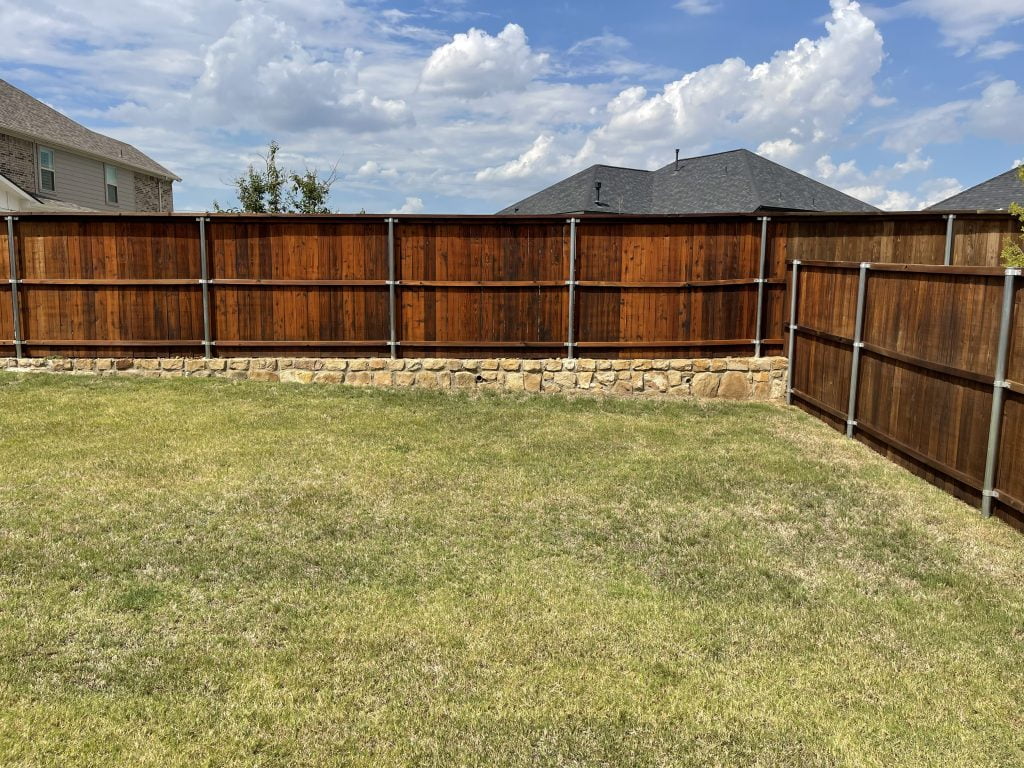
Re-stain most Fort Worth fences every two to three years, with sunny panels needing touch-ups sooner. Brutal UV, wild humidity swings, and those sideways spring storms beat on cedar harder than cooler climates ever will. If you want rich color, strong water repellency, and happy HOA letters, you need a plan that fits North Texas weather.
Thinking of one big weekend project? Stop and breathe. Exposure, wood age, product choice, and even overspray from sprinklers all change the clock. Curious how to protect both privacy and curb appeal while skipping wasteful over-coating? You’re in the right place and, yes, Millan Painting handles fence and deck staining so you don’t have to sweat the details.
Typical stain lifespans in Fort Worth
Here’s the quick overview you came for:
- Transparent/toner stains last about 12–24 months on sun-blasted runs.
- Semi-transparent penetrating stains push roughly 2–3 years in the DFW heat.
- Semi-solid or solid color stain stretches 3–5 years when prep and application are tight.
Wondering how long does fence stain last on south-facing panels or poolside sections? UV exposure, irrigation overspray, and wind-driven rain shave months off any finish. Vertical fences still outlast decks, but even they fade faster when chased by sprinklers or lacking fence caps.
What really determines how often you re-stain
Every yard plays by its own rules. Here’s why timelines shift:
- Sun and exposure: South-facing exposure and west runs bake all day, bleaching pigment and drying fibers.
- Wood species and age: New cedar holds oils that slow absorption; older boards sip stain like iced tea.
- Product type: Choosing between oil vs water-based fence stain decides penetration, film-forming, and VOC limits.
- Color depth: Darker hues boost fade resistance and block UV longer.
- Prep quality: Skipping fence washing before staining means dirt, mildew, and tannin bleed ruin adhesion.
- Irrigation and vegetation: Overspray plus vines trap moisture, spur mildew, and shorten the maintenance cycle.
- Application method: Spray, then back-brushing or spray and back-roll drives stain deep for even protection.
New fence timing: when to stain cedar in DFW
Fresh pickets look great but still sweat sap. When to stain a new fence usually lands 4–8 weeks after install, once a moisture meter hits about 15 %. Waiting allows mill glaze to mellow so stain penetrates, not peel. Jump too early and you’ll fight grain raising and early flake. Millan Painting confirms dryness, handles prep, and keeps that cedar glowing.
Your 3-step maintenance schedule
- Annual check Each spring or fall, inspect color, water beading, and gray spots. High UV? Plan sooner.
- Clean and evaluate Low-pressure power washing plus a brightener clears mildew and dust. Dry 24–48 hours before coating.
- Re-stain as needed Same line and shade simplify touch-ups and avoid fence sealing vs staining confusion. Spot coat sun-baked boards to extend life.
Oil vs water-based stains for Texas conditions
High-quality oil formulas dive deep, boost water resistance, and enrich grain. Added mildewcides fight humid-season growth. They cure slower, so watch evening dew and VOC rules. Premium water-based lines offer stable color, quick dry, and easy cleanup. They’re film-forming, yet breathable, and rival oils when prep is spotless. They also give more cedar deck stain options if you crave bolder tones.
Semi-transparent vs solid color: what lasts longer?
Choosing between semi-transparent or solid stain feels like picking barbecue sauce: flavor versus coverage. Semi-transparent finishes show grain and make future coats easy, but you’ll refresh in two or three years. Solid stains hide knots, pack pigment, and stretch to five years, yet swapping shades later needs stripping. Remember those HOA-approved fence stain colors Fort Worth neighborhoods demand before locking a hue.
Temperature, humidity, and rain timing in Fort Worth
Fence staining temperature and humidity sweet spots sit between 50–90 °F with moderate RH. After rain, wait 24–48 dry hours; shaded zones may need longer. Can you stain a fence in winter in Texas? Yes; during warm spells above product minimums. Start on shaded runs to avoid flash-dry, and you’ll dodge lap marks.
HOA color approvals and curb appeal
Fort Worth HOAs love uniform fences as much as you love hassle-free projects. Millan Painting keeps stain decks pre-approved by Southlake, Colleyville, Keller, and more. Matching the board’s list prevents fines and protects fence maintenance Fort Worth Texas harmony. Thinking resale? Consistent color and timely care can quietly increase home value. Ask to see our portfolio of work to preview shades already winning neighbor votes.
Millan Painting’s fence-first process
Your yard stays neat, your timeline stays clear. Every cedar fence staining Fort Worth job starts with a one-hour consult that covers exposure, product life, and fence staining cost Fort Worth. Transparent proposals spell out steps, so no one guesses.
On project day, crews protect landscaping, spray premium pigment, then back-brush for deep penetration. UV blockers, water repellents, and controlled dry times give the best stain for cedar fence real staying power. Clean paths and no nail pops mean the only change you see is a fence ready for the best stain for Texas sun.
Frequently Asked Questions
How often should you stain your fence in Fort Worth?
Plan a full coat every two to three years. South or west sides facing full sun may need spot work each spring.
How long does stain last on a cedar fence in Texas sun?
Quality semi-transparent finishes reach three years, while solid color can reach five when prep and back-brush happen.
How soon can I stain a new cedar fence?
Wait until wood moisture drops below 15%. In warm weather, that is about four to eight weeks after install.
Do I need to strip old stain before re-staining?
Only if the previous coat is peeling or blocking penetration. Sound, even film can simply be cleaned and recoated.
Oil vs water-based stain: which lasts longer in DFW?
High-grade oils often edge ahead thanks to deep soak, yet top water-based lines rival them when surface prep is flawless.
Ready for a fence that survives the Texas sun?
Skip the weekend struggle to paint old wood deck or fence. Call 817-545-9025, book Millan Painting, and lock in a finish built to beat North Texas weather. Questions about bundles or scheduling? Ask for details on fence and deck staining plus maintenance plans today.