
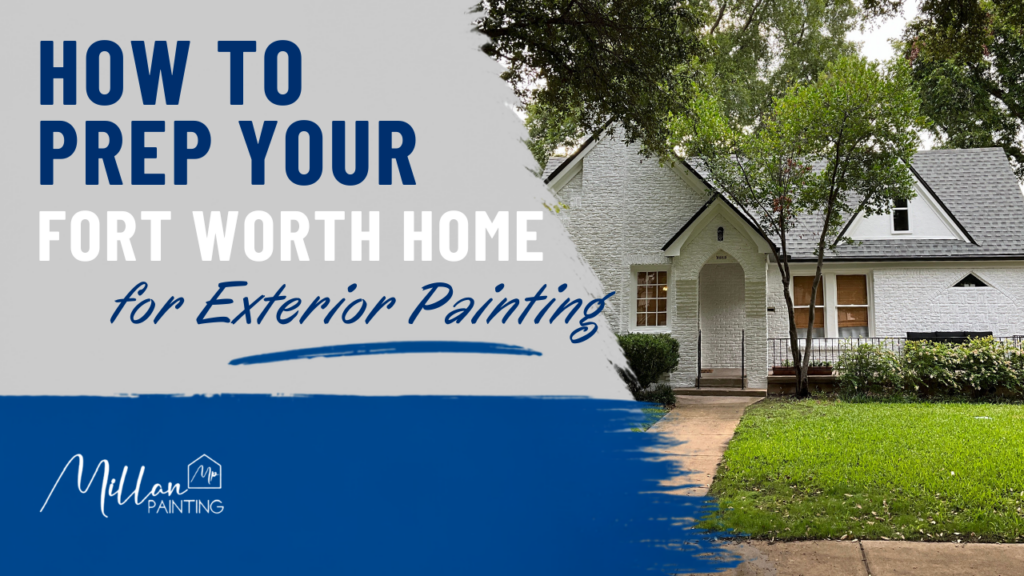
A lasting exterior paint job starts long before the first coat goes on…
If you are wondering how to prep your home for exterior painting, the process comes down to five important steps: cleaning, scraping, repairing, caulking, and priming.
Fort Worth homes deal with intense sun, heat, pollen, rain, and humid weather. Painting over a dirty, damp, or damaged surface may look good at first, but the problems underneath will eventually come back.
Inspect the Exterior
Start by walking around the entire home.
Look for peeling paint, cracked caulking, exposed wood, mildew, water stains, and damaged trim. Pay close attention to windows, doors, fascia boards, gutters, and shaded areas where moisture can collect.
Paint can improve the appearance of your home, but it cannot repair rotted wood or stop an active leak. Those issues should be addressed before painting begins.
Clean the Surface
Paint needs a clean surface to stick properly.
Over time, dirt, pollen, mildew, and chalky residue collect on your home’s exterior. These contaminants can prevent the new paint from bonding to the surface.
The exterior should be carefully washed and thoroughly rinsed. Pressure washing may be appropriate for some areas, but too much pressure can damage siding, trim, and windows.
Once the home is clean, give it enough time to dry completely. This may take longer during humid Fort Worth weather.
Scrape and Sand Loose Paint
Any peeling, bubbling, or flaking paint should be removed.
The goal is not to strip every bit of old paint from the house. The goal is to remove anything that is loose and create a stable surface for the new coating.
After scraping, rough edges should be sanded so they do not show through the finished paint job.
This step takes time, but it is one of the biggest factors in how long the new paint will last.
Repair and Caulk Damaged Areas
Once the loose paint is removed, hidden damage is often easier to see.
Small holes should be filled, loose trim should be secured, and rotted wood may need to be replaced.
Cracked or failing caulking around windows, doors, and trim should also be removed and replaced with a paintable exterior caulk. Caulking helps keep moisture out and gives the finished project cleaner lines.
Not every opening should be sealed, though. Some siding joints are designed to allow moisture to escape, so proper caulking requires more than simply filling every visible gap.
Prime Bare and Repaired Surfaces
Bare wood, repaired areas, stains, and other problem spots may need primer before painting.
Primer helps the finish coat bond properly and creates a more even surface. It can also prevent stains, rust, and wood tannins from showing through the new paint.
The right primer will depend on whether the surface is wood, brick, stucco, metal, or fiber cement.
Preparation Makes the Difference
Most homeowners notice the finished color.
We notice the work underneath it.
Cleaning, scraping, repairing, caulking, and priming are what help an exterior paint job look better and last longer.
At Millan Painting, we take the time to prepare every surface before the first coat goes on. If you are planning an exterior painting project in Fort Worth or the surrounding DFW area, contact us for an honest recommendation and a free, no-pressure estimate.